
The Spaces In-Between

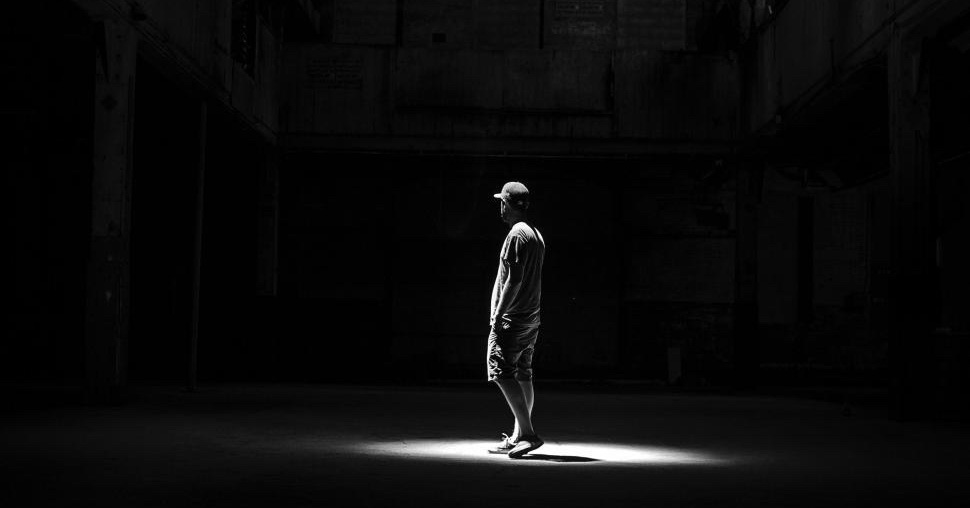
All my life I’ve been afraid of what I call “the spaces in-between.” The moments when I am left with nothing to distract me. The moments at which, in other words, I am confronted by my self as a reality which poses itself to me as a question. This is why I fill my backpack with books whenever I go anywhere. This is why, before iPhones, I always had a CD player or iPod on me: so that I would never have to encounter that most terrifying of prospects—the black hole of boredom, which is really a confrontation with the sorry state of “me” and the cruel venom of whatever psycho-spiritual reality I am currently dealing with.
I expect this should be rather relatable to most of my readers. Who today isn’t tempted endlessly to thumb their phone screen, constantly scrolling for some novel content, for some words which excite or enervate them enough to reenter a never-ending argument or spread the gospel of some “old” or “new” idea? I have purposefully isolated myself from the scroll and from social media other than Substack, and yet even writing for Substack can become a distraction if I approach it with the wrong state of mind.
I look at my children and already it seems they have caught on, even more than I have, to the pull of the momentum of more. So often, they ask to watch TV or use the tablet, and when they hear “No,” for ten minutes it is nothing but whining. “What can I do?” they moan, as if they are undergoing torture. Sure, eventually they begin using their imaginations to make up games to play inside or outside, or they dive into a good book—but only once they are pressed to and forget that they have been denied something. Because these activities involve some actual participation in life, they leave them with more peace and less emptiness at the end of the day. But before that can happen, they must first be forcibly detached from the simulacrum.
They exhibit a kind of precondition for facing what I have called “the spaces in-between.” They encounter boredom as they are forcibly cut away from realities which exist only behind a screen as simulacra. After remaining in that boredom long enough, they forget that they are missing something and enter into a more fulfilling and peaceable life by filling their time with activities that are not mere distraction, but which involve their own imaginations, bodies, and minds.
But children are incapable of facing “the spaces in-between” in their fullness because they lack the necessary self-awareness and ability to inquire into their state of being. In fact, most often, so do we. This is why a famous saying of the Desert Fathers may still be so difficult for us to receive:
A brother came to Scetis to visit Abba Moses and asked him, “Father, give me a word.”
The old man said to him, “Go, sit in your cell, and your cell will teach you everything.”
For most of us, this seems like emptiness and even hell: loneliness, boredom, purposelessness, and so on and so forth. Never mind what St. Macarius of Egypt says:
The heart itself is only a small vessel, yet dragons are there, and lions; there are poisonous beasts and all the treasures of evil; there are rough and uneven roads; there are precipices. But there too is God and the angels; life is there, and the Kingdom; there too is light, and there are the apostles and heavenly cities and treasures of grace. All things lie within that little space.
This saying is so important and yet so contrary to the spirit of our culture. We are taught to fear boredom and impulsively seek to escape it. We are taught that inactivity will leave us exposed to negative thinking, plunder us of all our progress, and, most fearfully, deprive us of the blind momentum that keeps us moving despite our not knowing quite why we are moving or whether the movement is fulfilling at all.
And yet it is only by forcing ourselves to sit long enough in our cells and in the “spaces in-between” that we can discover something capable of supporting, filling, and guarding us—something which reveals the infinite value and radiance of our true self. But this can be found only after we have first suffered the weight and blade of boredom and begun to understand the mechanism by which we are consistently caught up in the empty and soul-killing passions to which we are enslaved each day.
For what the cell teaches us first is how quickly we try to escape whatever rises within us. Our insecurities and fears project themselves into our minds as though they were prophecies of what will happen. Desires take form in images pressed upon the mind by demons. Wrath and resentment, born of insecurity and fear, arise as we imagine conversations in which we defend ourselves or devise ways to get even with those who have wounded our pride and exposed our weakness.
Anxiety rises, and despair approaches like a black cloud of non-being. Ordinarily, however, we never remain long enough to observe these thoughts watchfully: to see them arise as though from without us, as logismoi implanted by demons, and to discover that our disposition toward them is in fact malleable. Only when we struggle to realize that there is within the heart a depth reaching all the way into the Peaceful and Radiant Ocean of God—and that we can take shelter there in prayer—do we have any chance of being freed from our slavery to escapism, distraction, and the general movement of more which presses us forward through a meaninglessness we may not uncover until we are bedridden, old, and dying, when it is too late. This is the beginning of nepsis, or watchfulness—the most basic aspect of Orthodox or Hesychastic spirituality.
Watchfulness allows us to see the point at which we begin to consent to a thought and to recognize that what presents itself as irresistible is not the deepest truth of the heart. There is a place deeper than anxiety, despair, or craving from which, with God’s help, we can say “No” to Satan and the asps.
But the cell teaches us more than how our thoughts become passions or how those passions may be resisted. It brings us face to face with our true state of affairs. Only there do we encounter the corruption within and without us. Only there do we come face to face with the emptiness of our lives without God. And only as we consciously witness, again and again, how we fail to live up to our values and give in to sin do we undergo the humiliation necessary to receive the greatest asset and foundation of the spiritual life: the knowledge of our weakness and the humble acceptance that we are powerless without the intervention of a power greater than ourselves.
Nothing is greater, in the end, than the gift of realizing that one is powerless over one’s sin and that one’s ability to progress spiritually is not within one’s own power. Only from that moment can one truly pray, because one finally understands why prayer is necessary, even while knowing the utter gratuity and endlessness of God’s love.
Only then can we begin to understand why the spiritual classic Unseen Warfare begins by establishing that we must try with all our strength to do God’s will and have faith that He will help us, even though without His Grace it does not lie within our power to accomplish it.
Only then can the Ocean of Radiant Love and Goodness that is Divine Life begin to fill us until it pours out from us into the world. Only then do we see our need to pray ceaselessly, to continue struggling, and to place our relationship with God and His statutes first if we are to make any progress.
And most importantly, only then can we finally accept that freedom is not our ability to choose what we want or what is good, but rather the ability to enjoy the fruit of participating in and overflowing with the Good.
One could look at these spaces as portals into the present moment. In truth the only space in which one can meet the divine.